
148 Years and Still Pouring: The Incredible Story of St. Joseph’s First Ward House
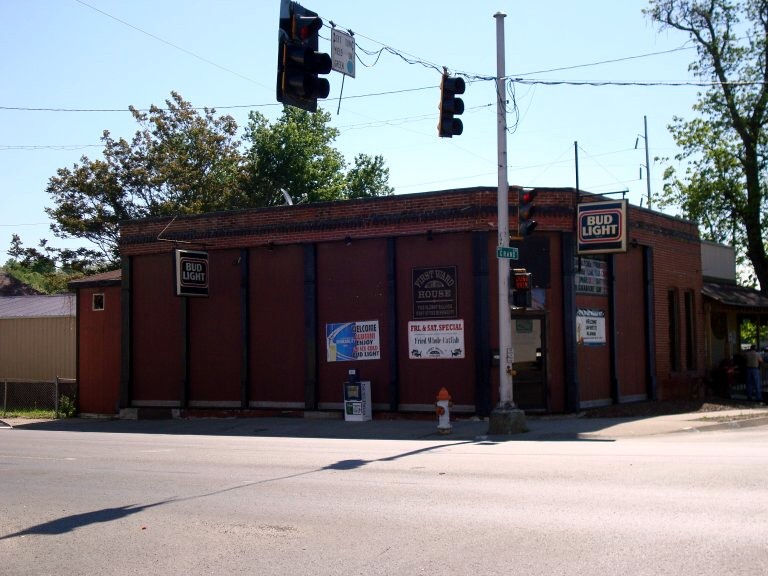
At the corner of St. Joseph and Grand avenues sits a building that thousands of people drive past every week without realizing just how much St. Joseph history is contained inside its walls. The First Ward House isn’t a modern bar designed to look old. Its story stretches all the way back to 1878, when St. Joseph was a booming railroad and river city and Jesse James was still alive
.
Nearly 150 years later, you can still walk through the doors at 2101 St. Joseph Avenue, grab something to eat and order a drink. Getting from 1878 to 2026, however, has been anything but easy.
The First Ward has survived Prohibition, drastic changes to the North End, the removal of most of its original building, years of deterioration and a devastating fire that nearly destroyed it on St. Patrick’s Day.
Through all of it, the First Ward somehow remained.
The First Ward Was Once Much Bigger
If you only know the First Ward as it looks today, an old photograph of the building might make you do a double take. The original structure was a large, multi-story brick building that towered over the intersection. The establishment reportedly began in 1878 with a saloon on the lower level and hotel or boarding accommodations upstairs.

Local historical accounts add a considerably more colorful detail: portions of the upstairs were reportedly associated with a brothel. A saloon downstairs, rooms upstairs and a brothel reportedly operating in the same building sounds like something from an Old West movie, but St. Joseph was a very different place in the late 1800s.
Railroads and commerce brought workers, travelers and money through the city. Hotels, boarding houses, taverns and other businesses followed them. The area around the First Ward was surrounded by activity that has largely disappeared from the modern North End.
Old photographs even show the Grand Avenue bridge immediately behind the building, crossing railroad tracks that once ran through the neighborhood. Today, the railroad is gone. The bridge is gone. Much of the original First Ward building is gone.
The bar... still there.
Prohibition Couldn't Kill It
Old St. Joseph records give us glimpses of the people and businesses that occupied 2101 St. Joseph Avenue over the decades.
Around 1915, records identify Mrs. Mary Friede operating a boarding house there. By around 1918, the address included both the boarding house and the William E. Wilson Saloon. Then America decided to outlaw alcohol.

National Prohibition began in 1920, creating an obvious problem for a business with a long history of selling drinks. So the business adapted. By around 1924, records identify John Friede Soft Drinks at 2101 St. Joseph Avenue, while Mary Friede continued operating the boarding house.
There isn't enough historical evidence to say the place secretly sold alcohol during Prohibition, and it wouldn't be responsible to assume it did. What we do know is that the business found a way to keep going.
By around 1930, John Friede was operating billiards at the address. After Prohibition ended, tavern and liquor businesses returned.
The familiar First Ward Tavern name appears in records by around 1949.
The drinking history of the property, therefore, is considerably older than the First Ward name itself.
Where Did the Other Floors Go?
One of the strangest chapters in the building's history explains why today's First Ward looks nothing like the massive structure seen in early photographs.
During the 1950s, the upper two floors were removed. But according to local historical documentation, the bricks weren't simply hauled away and forgotten. They were reportedly used in the reconstruction of the Pony Express Stables.
If that history is correct, pieces of one St. Joseph landmark literally became part of another. The demolition left behind essentially the lower portion of the building we recognize today.
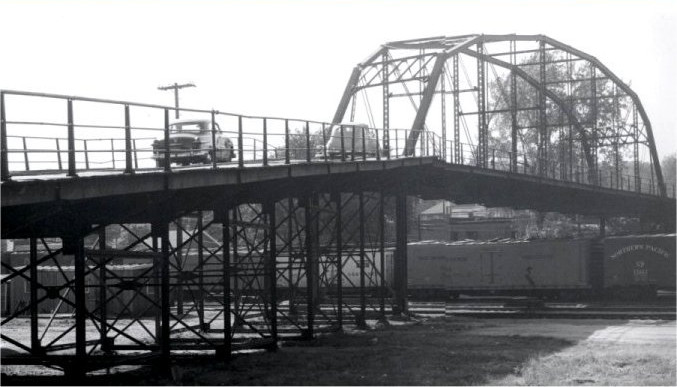
As the decades passed, the neighborhood surrounding it continued changing. Railroad traffic disappeared. Buildings came down. The Grand Avenue bridge eventually deteriorated and was removed in the early 1990s.
The First Ward itself wasn't immune to decline.
By the late 20th century, historical accounts describe the building as severely deteriorated and potentially facing demolition. After more than 100 years, the story could have ended there.
Instead, the property was extensively renovated in 1998, giving the old building another chance.
For a new generation of St. Joseph residents, the First Ward became the place many remember today: a neighborhood bar and restaurant with an outdoor deck, live entertainment, cold drinks and a tremendous amount of history hiding behind an otherwise unassuming exterior.
Then came March 17, 2015.
The Night St. Joseph Watched the First Ward Burn
If there is one night that should have ended the First Ward's story, it was St. Patrick's Day 2015. Shortly after 6 p.m., the St. Joseph Fire Department was called to a fire at the First Ward House.
Reports from the time indicate the blaze began near the rear deck or kitchen area. Strong winds helped spread the flames, and the situation escalated into a two-alarm fire.
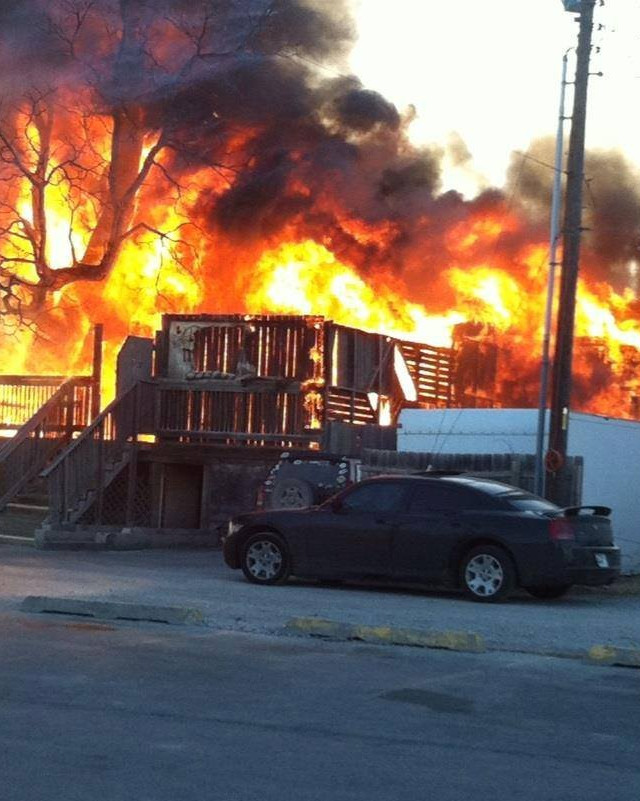
Approximately 40 people were reportedly inside when th
e fire started. Everyone escaped. No injuries were reported but the building wasn't so fortunate.
Flames ripped through the historic property as firefighters worked to control the blaze. Around 100 people reportedly gathered nearby and watched the First Ward burn.
Owner Ryan Gerster had reportedly left the business only about 10 minutes before learning about the fire.
For a building that had already survived more than 130 years, it appeared the end had finally arrived. Once again, it didn't.
The First Ward was rebuilt and reopened.
Gerster, an Army veteran who has described serving for 15 years on three continents, has continued the modern chapter of the historic business. Today, First Ward House remains a neighborhood bar and grill, serving food and drinks in essentially the same place St. Joseph residents were gathering generations ago.
What About Jesse James?
Any St. Joseph building that has been around since the 1800s eventually collects a few legends.
First Ward is no exception. Stories have circulated connecting the establishment to famous outlaws, particularly Jesse James. The timeline makes the story possible. First Ward's history dates to 1878, and James was living in St. Joseph when Robert Ford killed him in 1882.

But possible isn't the same thing as proven.
There doesn't appear to be strong primary historical documentation showing Jesse James actually drank at the First Ward. Other outlaw stories connected with the establishment should be treated similarly: interesting local lore rather than established fact.
First Ward has also long been billed as the “Oldest Saloon West of the Mississippi.” That's another claim that gets complicated.
Other establishments west of the Mississippi claim earlier histories, and deciding what qualifies as the oldest continuously operating saloon becomes difficult when you factor in Prohibition, ownership changes, name changes and periods when alcohol wasn't being sold.
But First Ward doesn't really need either claim.
Its documented history is impressive enough.
148 Years of St. Joseph
Think about what has happened since 1878.
St. Joseph grew beyond 100,000 residents before eventually shrinking again. Horses gave way to automobiles. Electricity arrived. Telephones entered homes. America fought two world wars. Prohibition outlawed alcohol and was repealed. The Great Depression came and went. Radio became television, television gave way to the internet, and entire sections of historic St. Joseph disappeared along the way.
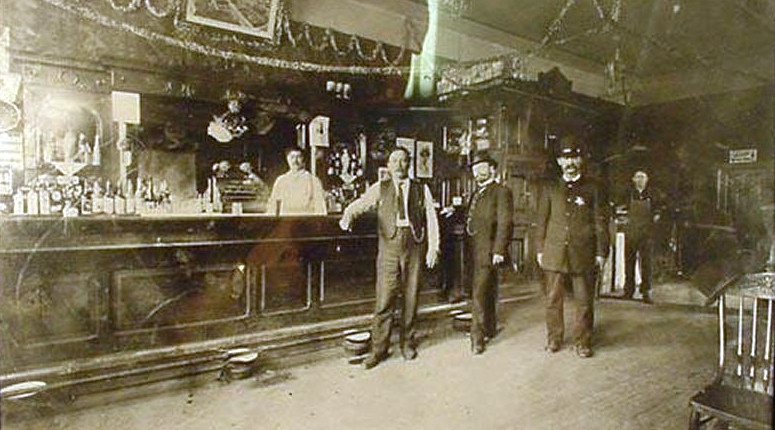
Even the world immediately surrounding the First Ward vanished.
The railroad behind it disappeared. The bridge disappeared. Two floors of the building disappeared.
The First Ward almost disappeared too.
But it didn't. And that's what makes the place important.
For nearly 150 years, people have walked through that corner of St. Joseph Avenue. They have eaten meals, drank beers, played pool, worked shifts, listened to music, watched games, met friends and made memories.
Different generations remember different versions of the place.
Some remember particular owners or bartenders. Others remember packed nights on the deck. Some remember watching the building burn in 2015 and wondering whether it would ever reopen.
For people who grew up around the North End, places like the First Ward become more than businesses. They become markers in your own life. You remember who you went there with, what the neighborhood looked like then and people who aren't around anymore.
That's the history that doesn't appear in city directories or newspaper archives.
St. Joseph has lost plenty of places we once assumed would always be here. Historic buildings have been demolished, longtime businesses have closed and entire pieces of neighborhoods exist today only in photographs.
The First Ward House somehow avoided becoming one of them.
So the next time you pass 2101 St. Joseph Avenue, look at it a little differently.
You're looking at the surviving bottom portion of a building that once stood several stories tall. A place that housed boarders, served generations of customers, adapted during Prohibition, nearly faced demolition and then nearly burned to the ground.
And after 148 years, you can still walk through the door and order a drink.
The First Ward doesn't need a Jesse James story to make it legendary.
Surviving this long is the legend.





Comments